Orbit
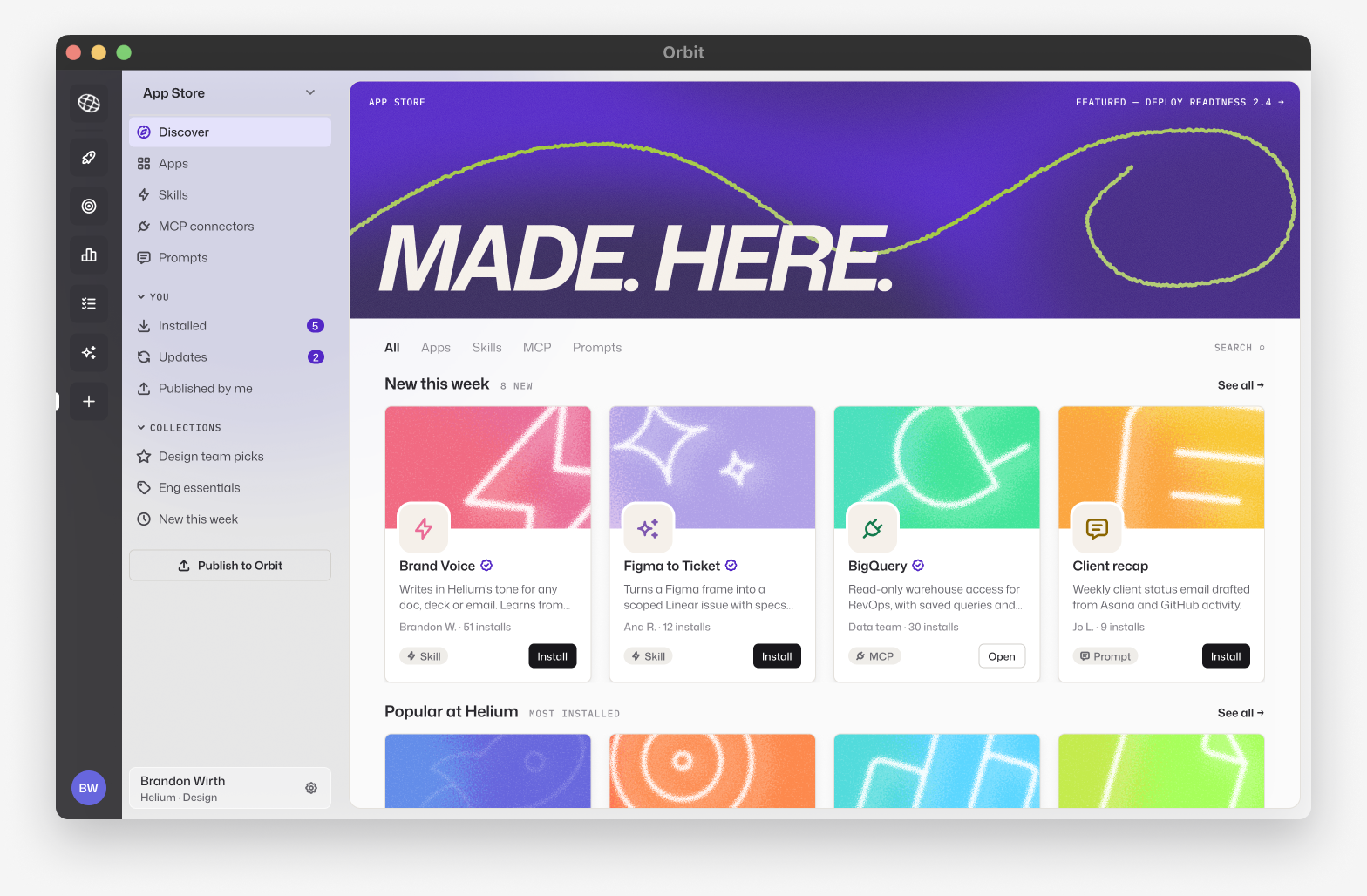
Designing and engineering Orbit (orbitapp.store)—a private app store and distribution hub that helps companies ship, discover, and manage their internal vibecoded apps, AI skills, MCP connectors, and prompts.
THE JUDGMENT CALLS
Four Artifacts, One Storefront
AI-era teams ship Apps, Skills, MCP connectors, and Prompts—usually scattered across Slack threads and zip files. We unified all four under one calm private App Store mental model.
Product Gravity Over IT Portal
Internal tools die when they feel like compliance dashboards. Exploring three full art directions—Field, Catalogue, and Atmosphere—made internal software feel worth opening every morning.
One-Command Distribution
Paired the storefront with npx @orbit-app/cli publish so any builder can go from a local vibecoded prototype to a signed, updatable team release in seconds.
Codified Foundations to React
No Figma-to-dev handoff wall: I built the Foundations & Guidelines, component primitives, Fleet Messenger, Orbit Build, and production React + TypeScript UI together.
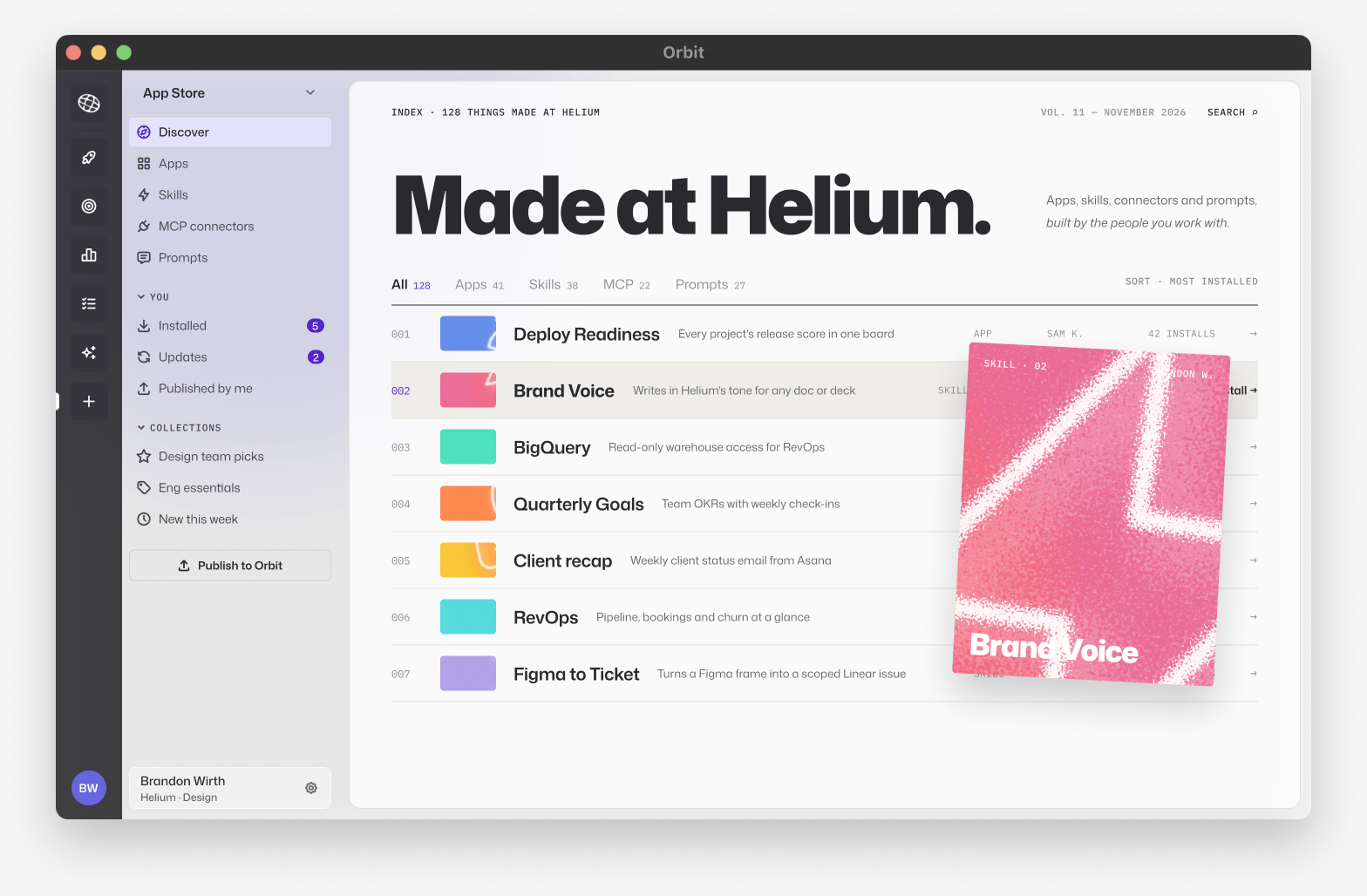
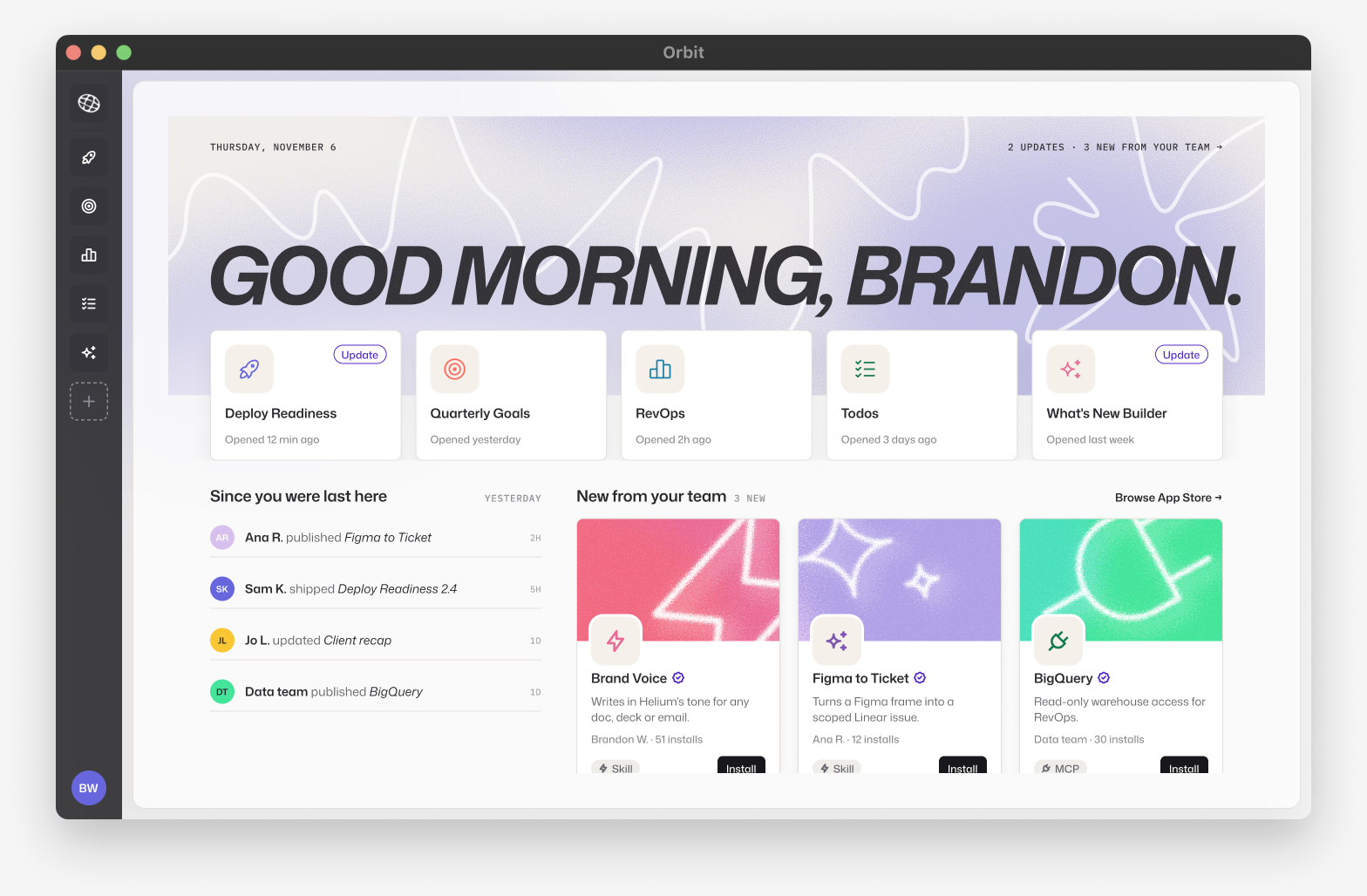
Bridging desktop-class feel with fast web primitives.
Orbit spans a desktop-class app shell, marketing presence (orbitapp.store), and interactive store views with real-time install states, update badges, and permissioned team channels.
I partnered directly on the React, TypeScript, and Tailwind CSS architecture—keeping Figma foundations and production CSS tokens tightly synchronized so rapid product iteration never degrades visual craft.
type OrbitArtifactKind = "app" | "skill" | "mcp" | "prompt";

interface OrbitCatalogItem {
  id: string;
  name: string;
  kind: OrbitArtifactKind;
  author: string;
  installs: number;
  status: "available" | "installed" | "update_ready";
}“Internal software shouldn't feel like an IT compliance portal. If a teammate built a great tool with AI, Orbit gives it a storefront worth opening every morning.”